
7-sustainability
Carbon Neutrality and Beyond
Loyola achieves net-zero carbon emissions and looks to set ambitious new sustainability goals
At the start of 2025, Loyola University Chicago reached a remarkable sustainability milestone, becoming one of only 15 carbon-neutral universities nationwide. This accomplishment fulfills a goal set in Loyola's 2015 Climate Action Plan and reflects more than a decade of dedicated efforts to integrate innovative, effective green practices across all of the University's campuses.
"Carbon neutrality is a landmark achievement, one achieved by only a handful of universities across the country." Aaron Durnbaugh, director of sustainability
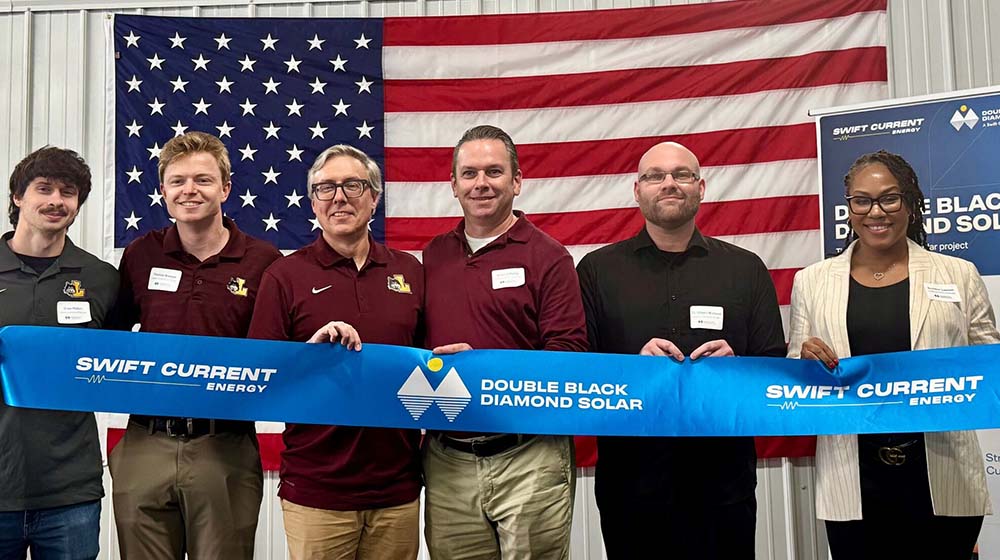
Loyola representatives at the Double Black Diamond ribbon cutting included (from left) graduate students Drew Pellico and Thomas Brelage, Director of Sustainability Aaron Durnbaugh, Energy Manager Brian O’Malley, SES Assistant Professor Gilbert Michaud, and Director of Neighborhood Initiatives Summur Lawson.
As part of its Climate Action Plan, the University completed a decarbonization study to identify strategies to cut emissions. It advanced its energy goals by installing geothermal wells throughout campus, optimizing space utilization, and making building-envelope improvements (wall insulation, roof insulation, window replacements).
Shifting to renewable electricity was another crucial step in Loyola's journey toward carbon neutrality. In April 2023, the University announced that it had signed an agreement with Constellation to purchase power from the Double Black Diamond solar project, allowing the developer to receive financing and build the project.
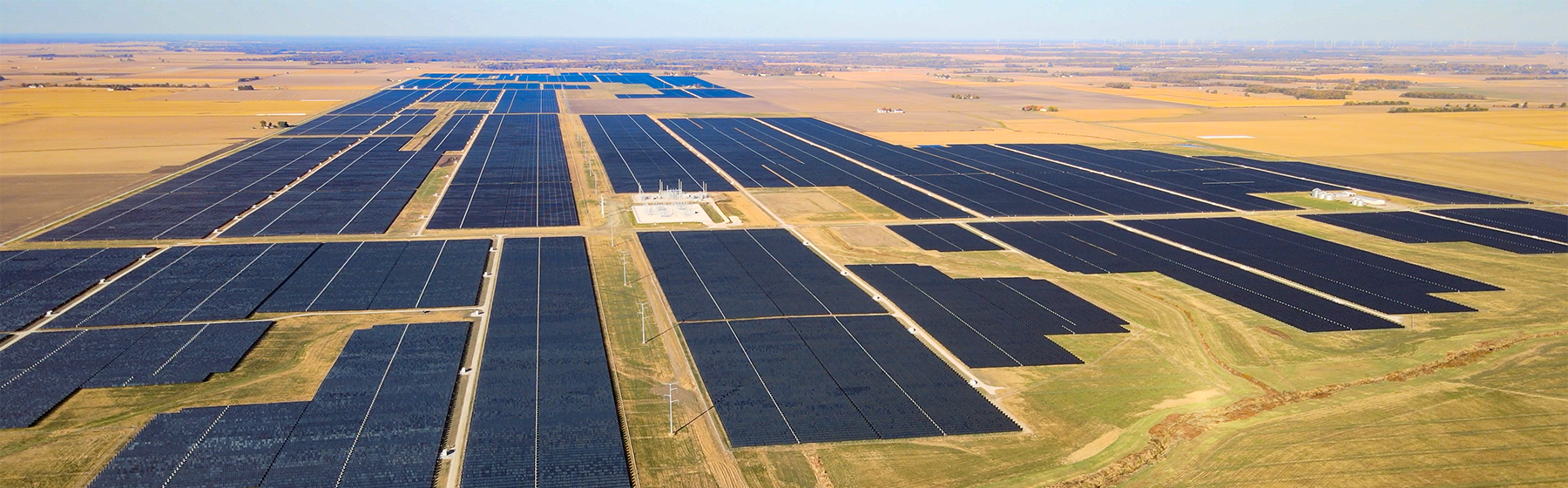
Double Black Diamond is a large-scale solar project operated by Swift Current Energy. The nearly five-mile-wide solar farm near Springfield, Illinois, is the largest solar project east of the Mississippi River and can power over 100,000 homes. As of January 1, 2025, the project supplies all the electricity needed to power the University's Chicago-area campuses.
Thomas Brelage (MS ’25) studied renewable energy policy as a master's degree student in the School of Environmental Sustainability (SES). His thesis research focuses on county commissioners’ perspectives on large-scale solar projects in rural Indiana. Given the connection to his research interests, Brelage was excited to join a group from Loyola at the ribbon-cutting ceremony for the solar project in April 2025.
"That was one of the first large-scale solar projects that I had seen in person, and the scale really blew me away. It was great to be a part of it," he said.
Investments in efficiency and renewable energy account for the majority of Loyola's greenhouse gas emissions reductions. The University offsets the remaining emissions through a partnership with the company Tradewater.
"We've made significant strides toward reducing the carbon footprint on our campuses in the past 10 years, and we work with the Chicago-based partner Tradewater to help us reach net-zero through high-quality carbon-reducing projects," said Durnbaugh.
In addition to offsetting emissions, Loyola's partnership with Tradewater creates educational opportunities for students, including internships. SES junior Robin Sinclair interned with the company during the summer of 2025. Her work involved reaching out to rural landowners to identify opportunities to repair or plug leaking oil and gas wells.
As an environmental policy major, Sinclair said the internship enhanced her understanding of policies related to carbon markets. It was also a valuable opportunity to explore career options.
"It gave me a clearer idea about the direction I want to go in my career," she said. "I think I'd like to work in carbon offsets at some point."
Carbon offsets comprise 15 percent of Loyola's zero-emissions achievement, and Durnbaugh says the University continues to work toward long-term sustainable solutions to improve efficiency and protect the environment.
"We're always looking for ways to improve," said Durnbaugh. "So, while we're taking a moment to celebrate this significant accomplishment, we're not resting on our laurels and instead seeking the next opportunities to make our campuses more sustainable."
Loyola is currently developing its next Climate Action Plan as a part of the University’s five-year strategic plan, titled “For the Greater Good.”
As part of its Climate Action Plan, the University completed a decarbonization study to identify strategies to cut emissions. It advanced its energy goals by installing geothermal wells throughout campus, optimizing space utilization, and making building-envelope improvements (wall insulation, roof insulation, window replacements).
Shifting to renewable electricity was another crucial step in Loyola's journey toward carbon neutrality. In April 2023, the University announced that it had signed an agreement with Constellation to purchase power from the Double Black Diamond solar project, allowing the developer to receive financing and build the project.
Double Black Diamond is a large-scale solar project operated by Swift Current Energy. The nearly five-mile-wide solar farm near Springfield, Illinois, is the largest solar project east of the Mississippi River and can power over 100,000 homes. As of January 1, 2025, the project supplies all the electricity needed to power the University's Chicago-area campuses.
Thomas Brelage (MS ’25) studied renewable energy policy as a master's degree student in the School of Environmental Sustainability (SES). His thesis research focuses on county commissioners’ perspectives on large-scale solar projects in rural Indiana. Given the connection to his research interests, Brelage was excited to join a group from Loyola at the ribbon-cutting ceremony for the solar project in April 2025.
"That was one of the first large-scale solar projects that I had seen in person, and the scale really blew me away. It was great to be a part of it," he said.
Investments in efficiency and renewable energy account for the majority of Loyola's greenhouse gas emissions reductions. The University offsets the remaining emissions through a partnership with the company Tradewater.
"We've made significant strides toward reducing the carbon footprint on our campuses in the past 10 years, and we work with the Chicago-based partner Tradewater to help us reach net-zero through high-quality carbon-reducing projects," said Durnbaugh.
In addition to offsetting emissions, Loyola's partnership with Tradewater creates educational opportunities for students, including internships. SES junior Robin Sinclair interned with the company during the summer of 2025. Her work involved reaching out to rural landowners to identify opportunities to repair or plug leaking oil and gas wells.
As an environmental policy major, Sinclair said the internship enhanced her understanding of policies related to carbon markets. It was also a valuable opportunity to explore career options.
"It gave me a clearer idea about the direction I want to go in my career," she said. "I think I'd like to work in carbon offsets at some point."
Carbon offsets comprise 15 percent of Loyola's zero-emissions achievement, and Durnbaugh says the University continues to work toward long-term sustainable solutions to improve efficiency and protect the environment.
"We're always looking for ways to improve," said Durnbaugh. "So, while we're taking a moment to celebrate this significant accomplishment, we're not resting on our laurels and instead seeking the next opportunities to make our campuses more sustainable."
Loyola is currently developing its next Climate Action Plan as a part of the University’s five-year strategic plan, titled “For the Greater Good.”